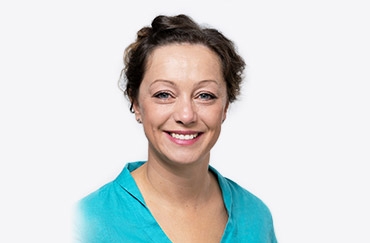
Neurologopedic speech therapist · Doctor of Humanities

dr Izabela
Malicka-Podkalicka

Neurological speech-language assessment and therapy for children and adults. I specialise in speech disorders related to craniofacial anatomy and function, and in therapy for central auditory processing disorders.

dr Izabela Malicka-Podkalicka, neurologopedic speech therapist — portrait

Kraków · Lusina · Wieliczka

Scroll
  • over a decade years of clinical and teaching practice
  • 40 graduates supervised
  • over60 theses reviewed
  • over a decade of scholarly publications

Uniwersytet Wrocławski Uniwersytet Śląski w Katowicach Uniwersytet Medyczny we Wrocławiu Uniwersytet im. Andrzeja Frycza Modrzewskiego w Krakowie Neuroflow ATS

01 — About me

Scientific foundations, clinical practice, and a calm conversation

I am a Doctor of Humanities and an assistant professor at the Faculty of Humanities of the University of Wrocław and the University of Silesia in Katowice. By training I am a Polish philologist and neurologopedic speech therapist, and a certified central auditory processing disorder (CAPD) therapist using the Neuroflow ATS method.

I work with children and adults with craniofacial anatomical defects and functional disorders of the orofacial area — such as cleft lip and/or palate, ankyloglossia, or malocclusion (including in orthognathic patients) — as well as with breathing and swallowing dysfunctions.

For over a decade I have been an academic lecturer on speech-language pathology and neurological speech-language pathology programmes (Medical University of Wrocław, Andrzej Frycz Modrzewski Krakow University), and the author of numerous scholarly publications in orofacial speech therapy.

02 — How I can help

Scope of assessment and therapy

I provide neurological speech-language assessment and therapy in areas related to orofacial anatomy and function, and to auditory processing.

  • Feeding disorders in newborns and infants

    Assessment of sucking, feeding, and orofacial function in the youngest patients.

  • Ankyloglossia assessment

    Assessment of ankyloglossia, including examination of the structure and length of the lingual and labial frenula, and their impact on motor function and orofacial development.

  • Care during orthodontic and ENT treatment

    Speech-language intervention alongside treatment provided by an orthodontist or ENT specialist.

  • Care before and after craniofacial surgery

    Pre-operative preparation and post-operative therapy, including for orthognathic patients.

  • Support for people with cleft lip and/or palate

    Speech assessment and therapy for children and adults with cleft lip and/or palate, at every stage of treatment.

  • Breathing and swallowing dysfunctions

    Assessment and remediation of primary functions — the respiratory tract and the oral phase of swallowing.

  • CAPD assessment and therapy using the Neuroflow method

    Certified assessment and auditory processing training using the Neuroflow ATS method.

  • Speech therapy for bilingual children

    Work on articulation and communication, and support for Polish language learning through reading.

  • Support for professional voice users

    Comprehensive articulation assessment and therapy for theatre school candidates and people who use their voice professionally.

03 — Where I practise

Consultation and practice locations

  • Private speech-language practice

    ul. Wicherkiewicza 23, Kraków

    Neurological speech-language assessment and therapy for children and adults.

    See on map
  • Audika — Hearing Assessment Centre

    ul. Szpunara 20, 32-020 Wieliczka

    Assessment and therapy for central auditory processing disorders (CAPD) using the Neuroflow method.

    See on map
  • International School of Kraków

    ul. św. Floriana 57, Lusina

    I work at this school and see school children only — speech-language assessment and therapy for bilingual children with articulation and communication difficulties, and support for Polish language learning through reading skills development.

    See on map

04 — CAPD

Central auditory processing disorders (CAPD)

I am a certified central auditory processing disorder therapist and provide assessment and therapy using the Neuroflow ATS method. The signs below are the most common reason parents and adult patients seek a consultation.

  • Difficulty understanding speech in noise

    Difficulty picking out a teacher's or parent's voice in a noisy environment: in the classroom, shopping centre, or playground.

  • Sense of hearing loss despite normal test results

    Basic physiological hearing tests are within normal range, but the patient's behaviour suggests a hearing problem.

  • Difficulty with auditory memory and following instructions

    The patient quickly forgets what they have heard or loses track in a sequence of several instructions (e.g. “put on your coat, take an umbrella, and go to the shop").

  • Confusion of similarly sounding words

    Difficulty distinguishing phonemes that sound alike (k–g, p–b, t–d), which affects pronunciation and causes problems with learning to read and write.

  • Hypersensitivity to sounds and auditory fatigue

    Becoming distracted by quiet background stimuli (a ticking clock, rustling paper) and severe fatigue after time spent in noisy places.

Central auditory processing disorders often co-occur with pronunciation difficulties, delayed onset of speech, or problems mastering foreign languages. The situation becomes even more complex in bilingual children — CAPD combined with learning two languages at once can deepen communication difficulties and make it harder for the child to produce sounds correctly.

Book a CAPD assessment

05 — Science and teaching

Research that informs practice

Research activity

My main research interests focus on speech disorders related to craniofacial anatomical and functional abnormalities. I consider my most important achievement to be several years of research on the speech of children with breathing and swallowing dysfunctions, conducted on the ENT ward of one of Kraków's hospitals.

I used statistical methods to analyse the results, which allowed me to maintain research objectivity and identify certain trends in the study group — findings that translate in a meaningful way into everyday speech-language practice.

Teaching activity

For over a decade I have taught at universities — the University of Silesia in Katowice, the University of Wrocław, Andrzej Frycz Modrzewski Krakow University, and the Medical University of Wrocław — on speech-language pathology and neurological speech-language pathology programmes.

My teaching covers primarily orofacial speech disorders, dysglossia, elements of orthodontics, early speech-language intervention, and neurogenic speech disorders in children and adults. I have supervised 40 bachelor's and qualifying theses at the University of Silesia and the Medical University of Wrocław, and reviewed over 60 bachelor's and master's theses.

I collaborate with the Institute of Speech-Language Education, delivering in-person and online training.

06 — Publications

Selected recent works

  1. 2026

    Malicka-Podkalicka I., Metodologia badań logopedycznych w przypadku dysfunkcji oddychania i połykania.

    in preparation

  2. 2025

    Malicka-Podkalicka I., Ankyloglosja w kontekście przebiegu wybranych czynności prymarnych i artykulacji, [w:] D. Pluta-Wojciechowska, K. Kaczorowska-Bray (red.), Czynności prymarne w logopedii, t. 2, Gdańsk: Wydawnictwo Harmonia.

    in press

  3. 2024

    Malicka-Podkalicka I., Ankyloglosja w kontekście zaburzeń wybranych funkcji biologicznych oraz realizacji fonemu /r/ na podstawie badań własnych, [w:] D. Pluta-Wojciechowska, M. Kazimierczak, M. Olma (red.), „Logopaedica Lodziensia" nr 10(2024), Diagnoza i terapia logopedyczna w świetle badań, Łódź: Wydawnictwo Uniwersytetu Łódzkiego, s. 37–50.

  4. 2023

    Malicka I., Przegląd wybranych klasyfikacji ankyloglosji w kontekście współpracy interdyscyplinarnej, „Logopedia" nr 52/1, s. 99–113.

07 — Questions and answers

Frequently asked questions

Who can benefit from therapy?

I work with both children and adults. I see patients with craniofacial anatomical defects and functional disorders of the orofacial area — such as cleft lip and/or palate, ankyloglossia, or malocclusion (including in orthognathic patients) — as well as with breathing and swallowing dysfunctions. I also provide assessment and therapy for central auditory processing disorders.

What is CAPD and what does Neuroflow assessment involve?

CAPD stands for central auditory processing disorders. They may present as difficulty understanding speech in noise, a sense of hearing loss despite normal physiological hearing test results, problems with auditory memory and following instructions, confusion of similarly sounding words, and hypersensitivity to sounds and auditory fatigue.

I am a certified central auditory processing disorder therapist and provide assessment and therapy using the Neuroflow ATS method — at Audika Hearing Assessment Centre in Wieliczka.

Do you work with bilingual children?

Yes. I provide speech-language assessment and therapy for bilingual children with articulation and communication difficulties, and I also support Polish language learning through reading skills development. I work in this area, among other settings, at the International School of Kraków, where I see school children only. It is worth noting that CAPD combined with learning two languages at once can deepen communication difficulties.

Do you provide therapy for professional voice users?

Yes. I provide comprehensive articulation assessment and therapy — both for theatre school candidates and for people who use their voice professionally.

Where do consultations take place and how do I book an appointment?

I hold consultations at my private speech-language practice at ul. Wicherkiewicza 23 in Kraków and at Audika — Hearing Assessment Centre at ul. Szpunara 20 in Wieliczka. I also work at the International School of Kraków at ul. św. Floriana 57 in Lusina, where I see school children only.

To book an appointment, please contact me by phone at +48 606 440 357 or by email at imalickapodkalicka@gmail.com.

08 — Contact

Let's schedule a first consultation

Phone +48 606 440 357 Email imalickapodkalicka@gmail.com

Please contact me by phone or email to book an appointment. I am happy to answer questions about assessment and therapy.